Modified Barium Swallow Study ACR-SPR Practice Parameter: 2023 Update
Applied Radiology — Vol. 53 , Issue 2 , pp. 4 -10
DOI: 10.37549/AR2963
Published: March 1, 2024
Categories
Introduction
The modified barium swallow study (MBSS) is a videofluoroscopic study used to evaluate oral and pharyngeal swallowing and airway protection.1-6 The American College of Radiology (ACR) creates and periodically updates Practice Parameters and Technical Standards for various radiologic procedures, including the MBSS. The goal of these Practice Parameters is to “promote the safe and effective use of diagnostic and therapeutic radiology by describing specific training, skills, and techniques,” and to “narrow the variability among radiology practices and provide guidance to achieve quality in radiology.”7 In 2023, the ACR partnered with the Society of Pediatric Radiology (SPR) to update the MBSS Practice Parameter. Here, the ACR-SPR Practice Parameter for the Performance of the Modified Barium Swallow Study is summarized, with a focus on the changes made in the recent update.8
The MBSS Description and Indications
The MBSS is a real-time, contrast-enhanced fluoroscopic study performed to assess oral and pharyngeal swallowing function, airway protection, and clearance of swallowed material.1-6 It is typically performed by a radiologist and a speech-language pathologist (SLP). (Figure 1) The exam assesses the oral cavity, pharynx, larynx, and pharyngoesophageal junction. In addition to this general description, the 2023 update to the MBSS Practice Parameter includes a new paragraph describing the primary goals of the MBSS more specifically: to “identify and distinguish the presence, type, and estimated severity of physiologic swallowing impairment; determine the safety of oral intake (airway protection); determine the efficiency of oral intake (clearance); detail the effects of selected frontline interventions (postures, maneuvers, bolus variables) on swallowing physiology, airway protection, and efficiency; identify indications for specific interventions that may be appropriate for the clinical condition of the patient; and develop intake (oral, tube, etc) and diet texture/nutritional management plans in collaboration with the physician and other interdisciplinary team members.” The most commonly used contrast agent for oropharyngeal swallowing assessment contains the active ingredient barium sulfate. Patients are asked to swallow different consistencies of barium to evaluate swallowing physiology and the impact of consistencies and volumes on swallowing function.10-16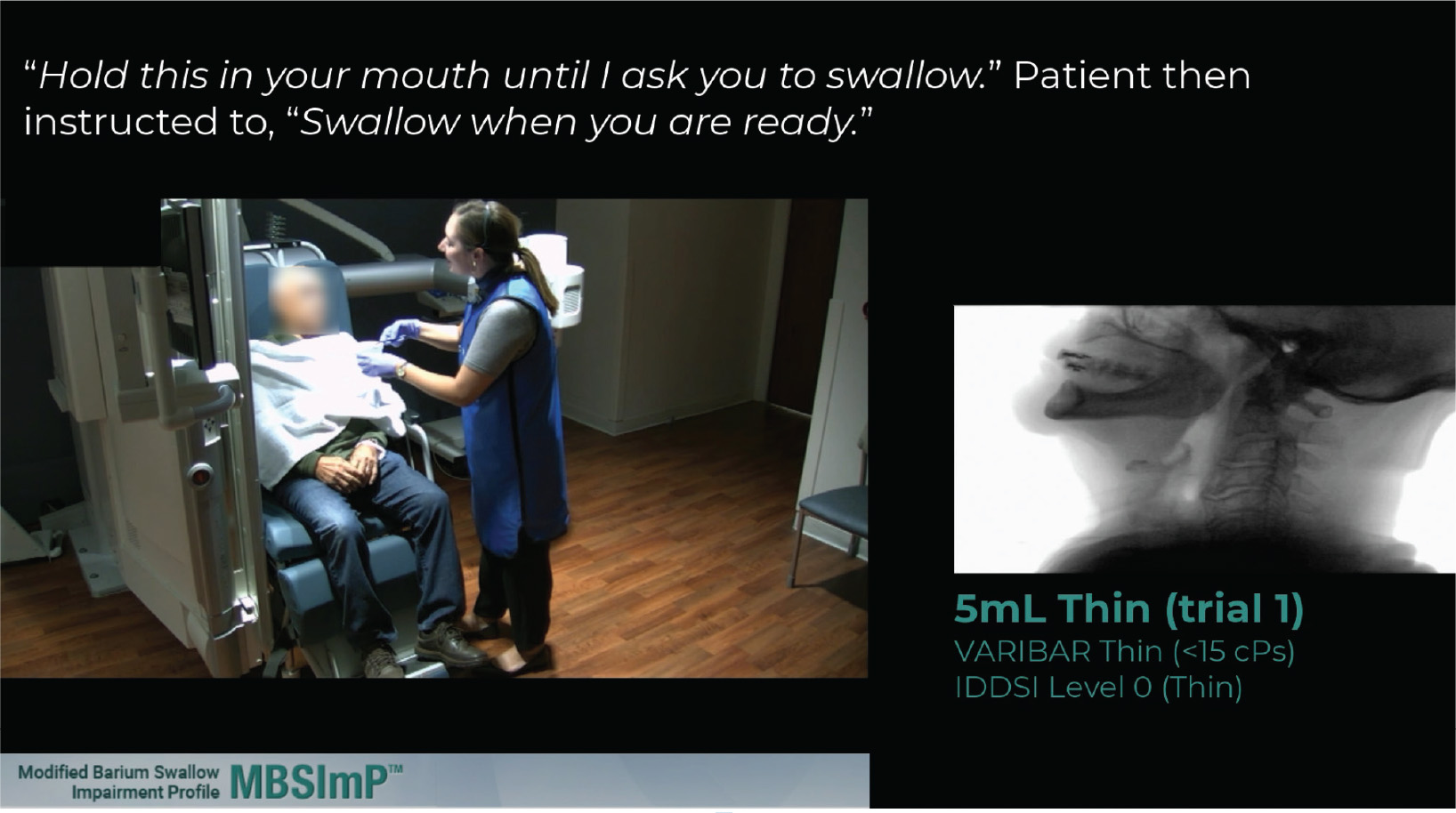
The MBSS is indicated for known or suspected oropharyngeal dysphagia. The updated ACR-SPR MBSS Practice Parameter lists 20 indications for the MBSS, up from 15 in the prior version. Additions focus mainly on broadening the indications (eg, neurologic or neurodegenerative; myopathy or nerve injury; preoperative and follow-up posttreatment), but several are entirely new: pulmonary conditions possibly related to swallowing dysfunction; after prolonged intubation and/or deconditioning; prior abnormal MBS with subsequent modification of swallow technique or improvement in patient conditioning; nasal stuffiness or noisy breathing that worsens with feeding (pediatrics); and laryngotracheal cleft.8 Unlike the previous version of the practice parameter, the update includes several contraindications: (1) known or suspected leaks from the pharynx or esophagus such as those following trauma or surgery (if a leak is suspected, an esophagram using nonionic low osmolar water-soluble contrast material should be performed before MBSS); and (2) known or suspected tracheoesophageal fistula (if suspected, an esophagram using low osmolar water-soluble contrast material should be performed before MBSS).8
The Modified Barium Swallow Study Protocol
The study protocol section of the ACR-SPR MBSS Practice Parameter includes the following: (A) Patient Selection, Preparation, and Positioning; (B) Personnel; (C) Method of Recording; (D) Modified Barium Swallow Technique; and (E) Radiographic Quality Control.8
In the Patient Selection, Preparation, and Positioning section, the Practice Parameter states that “swallowing functions are usually evaluated initially in the lateral plane with the patient upright, with gravity assistance to mimic the eating and drinking position. The lateral view may be followed by frontal view observations, whenever positioning allows, to provide evaluation of symmetry of swallowing function. Stable, commercially-prepared barium and validated, standard protocols are encouraged to optimize visualization and reproducibility of the MBS and comparison of findings across sites.”8,13,15,16
The last recommendation, to use stable, commercially-prepared barium and validated, standard protocols, has been made by experts in oropharyngeal swallowing evaluation for years, and is now included throughout the ACR-SPR Practice Parameter.13,15,16 The only available standardized assessment protocol for the MBSS exam that has been rigorously tested and validated specifically for scoring oropharyngeal swallow physiology is the Modified Barium Swallow Impairment Profile (MBSImP).11,13 The MBSImP tool assesses 17 components of swallowing physiology and bolus clearance for each consistency of barium sulfate contrast.11,13 (Table 1) When used, the MBSImP allows for specific, consistent, accurate, and objective interpretation and communication of MBSS results.11,13,18,19
The contrast used for the MBSS is barium sulfate, and only one commercially prepared, US Food and Drug Administration (FDA)– approved agent specifically indicated for the MBSS exists: Varibar (Bracco Diagnostics Inc.; Figure 2). Varibar products have been formulated specifically for healthcare providers to use during the MBSS based on consistencies known to affect swallowing physiology.11,16,20 In addition, Varibar possesses minimal coating properties in order to facilitate clear visualization of the dynamic swallowing process.21,22 In standardized MBSS methodology, swallowing of a full range of barium volumes—from lower to higher—and consistencies—thin to thick—is tested using the standardized MBSImP assessment tool.14,23 Importantly, the MBSImP assessment tool was validated using Varibar; therefore, as stated in the ACR-SPR MBSS Practice Parameter, using them together is recommended to ensure reproducible, high-quality MBSS results.12,14,16,20 Despite this emphasis on standardization, it is important to note that the MBSS performed should be based on the clinical experience of the radiologist and SLP and tailored to the patient’s specific clinical question.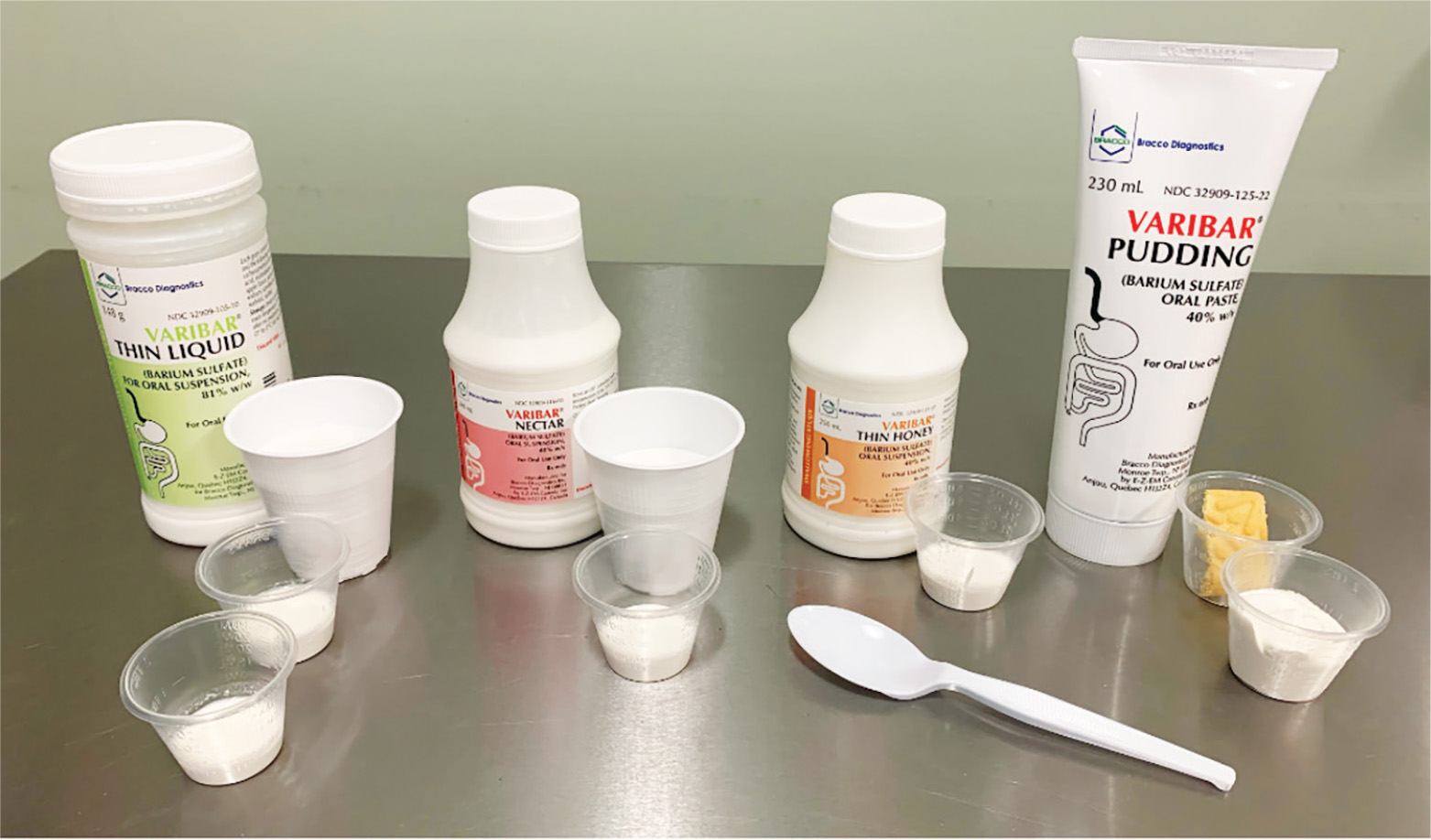
The section on Personnel states that the examination may be performed by a physician alone for diagnostic evaluation or by a physician and a speech-language pathologist together for both diagnosis and recommendation for therapy.8 The 2023 update also allows for a nonphysician radiology provider (NPRP) to perform the test under physician supervision.8 The precise role of the NPRP is more clearly delineated in the section on Qualifications And Responsibilities Of Personnel (see below).8 The Method of Recording section describes the recommendations for recording functional and morphologic assessment: “For functional assessment, the fluoroscopic portion of the examination should be recorded on high-resolution videofluorographic (VF) and/or rapid digital fluorographic imaging.”8,10,24 This section is essentially unchanged in the updated Practice Parameter, except for removal of the statement that single contrast techniques may be sufficient in children.
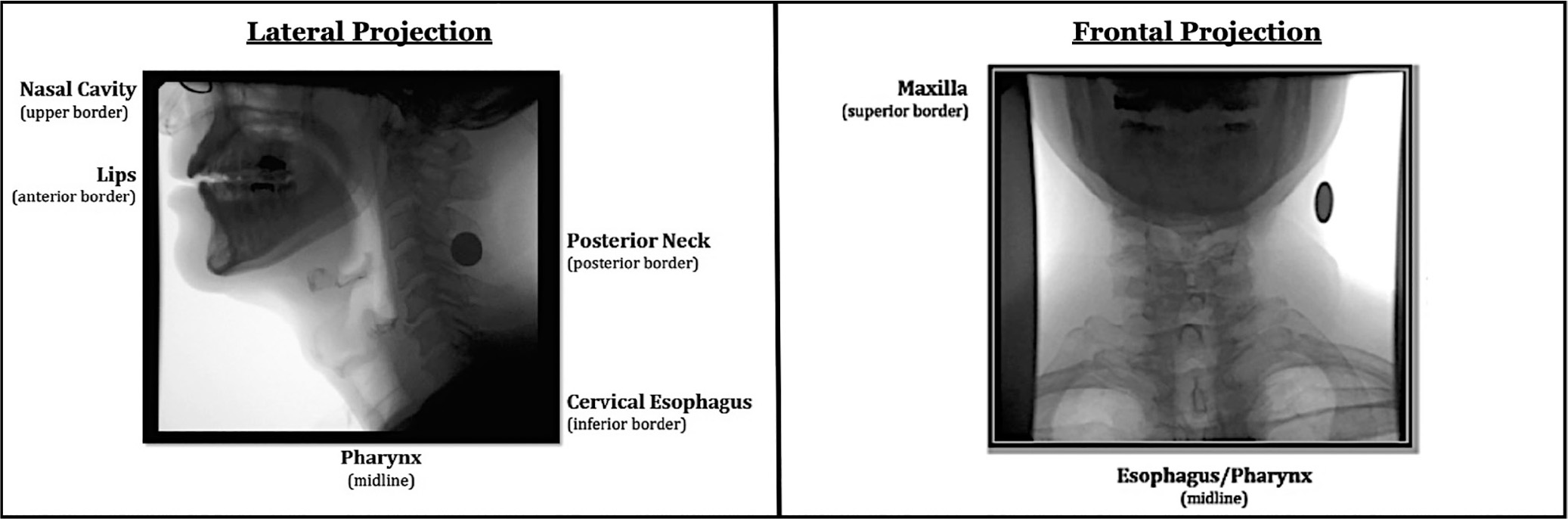
The MBSS technique section reviews the examination protocol itself; the VF recording medium; tailored examinations; and protective, therapeutic, and provocative maneuvers. The Examination section describes the anatomical areas that should be evaluated: “The examination should include evaluation of oral, and nasopharyngeal, pharyngeal, laryngeal, and pharyngoesophageal segment function and morphology in the lateral projection. Evaluation in the frontal projection, including the oral cavity, pharyngeal walls, pharyngoesophageal segment, and upper airway, is useful to view symmetry of function and effects of applied compensatory strategies on swallowing safety and bolus clearance.”8 (Figure 3) The VF recording medium section describes recommendations related to technical aspects (eg, administration of barium consistencies and volumes customized for the MBSS and approximating the consistencies of liquids and food in an oral diet to detect swallowing impairment; assessment of the patient’s response to airway invasion, their ability to clear the aspirated materials, and their response to protective and therapeutic maneuvers; and the use of 30 pulses per second or continuous fluoroscopy).8 This section also discusses tailoring the exam to the patient, using protective and therapeutic maneuvers to limit aspiration, and provocative maneuvers to evoke or eliminate swallowing dysfunction.8 The 2023 update to this section also:
Expands areas required for evaluation to include nasopharyngeal, laryngeal, and pharyngoesophageal function and morphology;
Highlights the limitations of the MBSS in assessing esophageal function;
States that, “depending on patient symptoms and findings (or lack of findings) on MBS, an esophagram may be required to complete the assessment of the patient.”8,25-28
The VF recording section has been rewritten to emphasize a number of points. First, the prior version stated that the MBSS should be performed “while the patient swallows a variety of consistencies of barium or barium-impregnated food with varying bolus volumes,” and that “the viscosity and volume of each bolus may be varied by the clinical judgment of the speech-language pathologist or the radiologist based on the patient’s presenting symptoms.”8
The newly revised Practice Parameter now says the MBSS should be performed “while the patient is administered barium consistencies and volumes customized for the MBS and that approximate the consistencies of liquids and food in an oral diet to detect swallowing impairment.”8 Moreover, the guidance now states that the use of a standardized and validated set of commercially prepared barium consistencies and volumes is recommended whenever possible, to ensure the ability to reproduce or compare repeat evaluation results, to reduce risks associated with aspiration of these substances, and to minimize infection control issues.8,11,13,18,19
These statements are consistent with those made throughout the updated guidance document that highlight the importance of using a standard protocol and commercially prepared, validated barium products to ensure repeatability and minimize contamination.13,15 Additionally, these statements are made to address the practice of mixing barium sulfate with foods and liquids, as has been done in the past in “barium kitchens.” Such practice is not recommended for a number of reasons: increased risk of aspiration, the risk of contamination from a food safety perspective, and difficulty replicating the standardized consistencies and barium concentrations within and between clinical practices, increasing intra- and interpatient variability of test results.16
The second notable addition to the VF Recording section, absent from the prior version, is guidance regarding fluoroscopic acquisition rates. Per the updated Practice Parameter: “The literature supports a fluoroscopic acquisition rate of 30 pulses per second or continuous fluoroscopy whenever possible to provide optimal visualization of rapid movements associated with swallowing and aspiration detection.18,29,30 However, fluoroscopic acquisition rates should be determined by the supervising radiologist with attention to optimally minimizing the patient’s radiation exposure and maximizing adequate swallowing evaluation.”8
Third, the updated guidance clarifies the role of the MBSS in evaluating the esophagus: “An evaluation of esophageal structure and function is beyond the scope of the MBS, which is focused on assessment of functional swallowing in the areas of the oral cavity, pharynx, larynx, and pharyngoesophageal junction.”8 MBSImP training documents concur: the role of the SLP in assessment of esophageal function should be limited to observation of bolus clearance in the upright or semi-upright position, and the MBSS or MBSImP approach is not designed to evaluate esophageal motility or structural abnormalities.36 In the MBSS Practice Parameter, it is further suggested that for evaluation of the esophagus, one consult the ACR Practice Parameter for the Performance of Esophagrams and Upper Gastrointestinal Examinations in Adults and the ACR–SPR Practice Parameter for the Performance of Contrast Esophagrams and Upper Gastrointestinal Examinations in Infants and Children.8,31,32
MBSS Pediatric Considerations
Importantly, the conclusion of the VF Recording Medium section of the updated ACR-SPR MBSS Practice Parameter document, now includes a new section supporting pediatric considerations. The recommendations, which are listed in Table 2,8 state that “pulsed fluoroscopy, preferably at 15 pulses per second, is recommended to reduce the radiation dose.”8 However, this recommendation remains controversial. Some experts consider a frame rate of 30 frames per second necessary to obtain sufficient quality images.10,18 In addition, reduction in frame rate may not result in the expected concordant decrease in radiation exposure to the patient. (J. Hill; pers comm) Therefore, such guidance should be discussed among those involved in making these technical decisions and should include pediatric radiologists and medical physicists. Notably, perhaps the most effective way to reduce radiation exposure is to eliminate inappropriate or unnecessary examinations and, therefore, ensuring that an MBSS is appropriate for a particular patient is vital.
Staff Roles and Responsibilities
Because the MBSS involves a team of healthcare providers, the Practice Parameter aims to define the role of each team member, as well as the expectations for their training. The team includes the physician, the NPRP, the radiologic technologist, and the SLP.8 With the exception of the SLP, there are few changes to the updated MBSS Practice Parameter in this section. The physician should be licensed and trained, and be up-to-date in their continuing medical education.8 The NPRP (which includes a registered radiologist assistant [RRA], radiology practitioner assistant [RPA], etc.) may assist with or participate in portions of the practice of a radiologist-led team.8 The radiologic technologist should be qualified to perform GI radiography; this includes certification by the American Registry of Radiologic Technologists (ARRT) or unrestricted state licensure.8 For SLPs, in addition to holding the Certificate of Clinical Competence in SLP from the American Speech-Language-Hearing Association (ASHA), their role has been slightly updated: “This professional should have specific education and training related to the indications and to the performance and interpretation of the MBS using validated and standardized methods.”8 Note again the use of the words “validated” and “standardized,” and how they appear repeatedly throughout the updated Practice Parameter.
Documentation
The section on documentation states that “reporting should be in accordance with the ACR Practice Parameter for Communication of Diagnostic Imaging Findings.8,33 In addition, it states that “comparison to prior MBS studies should be performed when relevant, particularly when the examination is performed to follow up previously demonstrated abnormalities” and that “patient identity (using name and/or a unique identifying number) and examination date should be recorded on the VF recording medium.”8 The only changes to this section emphasize the importance of teamwork and collaboration: “The images should be reviewed by the performing team with a discussion of the findings and conclusions agreed upon by them” and, “if there are any discordant opinions not resolved by image review, additional imaging should be performed.”8 This point is essentially reiterated at the end of this section: “It is recommended that the radiologist and speech-language pathologist corroborate findings at the conclusion of the examination.”8,10
Equipment Specifications
Per the Practice Parameter: “Equipment performance monitoring should be in accordance with the ACR–AAPM Technical Standard for Diagnostic Medical Physics Performance Monitoring of Radiographic Equipment and the ACR–AAPM Technical Standard for Diagnostic Medical Physics Performance Monitoring of Fluoroscopic Equipment.8,34 The section on equipment specifications has been updated primarily to include reference to the importance of creating and maintaining a Quality Control (QC) Program. Specifically, the following has been added: “The equipment should be part of a Quality Management (QM)/QC Program. The QM/QC program should include an annual survey by a medical physicist.”8
Radiation Safety, Quality Control, Safety Control, and Patient Education
No changes have been made to these sections. All individuals involved in the MBSS are responsible for safety, including ensuring radiation exposure is “as low as reasonably achievable (ALARA).”8 In addition, the parameter recommends that “policies and procedures related to quality, patient education, infection control, and safety should be developed and implemented in accordance with the ACR Policy on Quality Control and Improvement, Safety, Infection Control, and Patient Education on the ACR website.”8,35
Conclusions
In 2023, the ACR and SPR updated the practice parameter for the MBSS. Overall, the most significant changes included an emphasis on using standardized, validated protocols together with stable, commercially prepared barium sulfate products, as well as the addition of specific recommendations for pediatric patients. To improve patient care and management, these updated recommendations should be considered when developing or reviewing MBSS protocols.
References
- Dodds W, Logemann J, Stewart E. Radiologic assessment of abnormal oral and pharyngeal phases of swallowing. AJR Am J Roentgenol. 1990;154:965-974.
- Dodds W, Stewart E, Logemann J. Physiology and radiology of the normal oral and pharyngeal phases of swallowing. AJR Am J Roentgenol. 1990;154:953-963.
- Martin-Harris B, Logemann J, McMahon S, Schleicher M, Sandidge J. Clinical utility of the modified barium swallow. Dysphagia. 2000;15:136-141.
- Rubesin S. The pharynx. Structural disorders. Radiol Clin North Am. 1994;32:1083-1101.
- Jones B. The pharynx. Disorders of function. Radiol Clin North Am. 1994;32:1103-1115.
- Beall J, Hill E, Armeson K, Garand K, Davidson K, Martin-Harris B. Classification of physiologic swallowing impairment severity: A latent class analysis of modified barium swallow impairment profile scores. Am J Speech Lang Pathol. 2020;29:1001-1011.
- Practice Parameters and Technical Standards.
- ACR-SPR Practice Parameter for the Performance of the Modified Barium Swallow Study.
- Martin-Harris B, Steele C, Peterson J. Stand up for standardization: Collaborative clarification for clinicians performing Modified Barium Swallowing Studies (MBSS). 2020.
- Martin-Harris B, Canon C, Bonilha H, Murray J, Davidson K, Lefton-Greif M. Best Practices in Modified Barium Swallow Studies. Am J Speech Lang Pathol. 2020;29:1078-1093.
- Hazelwood R, Armeson K, Hill E, Bonilha H, Martin-Harris B. Identification of swallowing tasks from a modified barium swallow study that optimize the detection of physiological impairment. J Speech Lang Hear Res. 2017;60:1855-1863.
- Hind J, Divyak E, Zielinski J. Comparison of standardized bariums with varying rheological parameters on swallowing kinematics in males. J Rehabil Res Dev. 2012;49:1399-1404.
- Martin-Harris B, Brodsky M, Michel Y. MBS measurement tool for swallow impairment--MBSImp: establishing a standard. Dysphagia. 2008;23:392-405.
- Martin-Harris B, Humphries K, Garand K. The Modified Barium Swallow Impairment Profile (MBSImP™©) – Innovation, dissemination and implementation. Perspectives of the ASHA Special Interest Groups. 2017;2:129-138.
- Martin-Harris B, Bonilha H, Brodsky M. The modified barium swallow study for oropharyngeal dysphagia: Recommendations from an interdisciplinary expert panel. Perspectives of the ASHA Special Interest Groups. 2021;6:610-619.
- Steele C, Martin-Harris B, Gosa M, Allen S. Applications in contrast imaging: diagnosis and management of swallowing physiology: Standardized contrast, the MBSImP™, & the IDDSI Framework continuing education monograph, Applied Radiology. 2021.
- Lee J, Park E, Hwang J, Jung T, Park D. Machine learning analysis to automatically measure response time of pharyngeal swallowing reflex in videofluoroscopic swallowing study. Sci Rep. 2020;10:14735.
- Bonilha H, Humphries K, Blair J. Radiation exposure time during MBSS: influence of swallowing impairment severity, medical diagnosis, clinician experience, and standardized protocol use. Dysphagia. 2013;28:77-85.
- Hazelwood R, Armeson K, Hill E, Bonilha H, Martin-Harris B. Relating physiologic swallowing impairment, functional swallowing ability, and swallow-specific quality of life. Dysphagia. 2023;38:1106-1116.
- Robbins J, Nicosia M, Hind J. Defining physical properties of fluids for dysphagia evaluation and treatment. Perspectives on Swallowing and Swallowing Disorders (dysphagia). 2002;11:16-19.
- Steele C, Molfenter S, Péladeau-Pigeon M, Stokely S. Challenges in preparing contrast media for videofluoroscopy. Dysphagia. 2013;28:464-467.
- Gosa M, Dodrill P, Robbins J. Frontline Interventions: Considerations for modifying fluids and foods for management of feeding and swallowing disorders across the life span. Am J Speech Lang Pathol. 2020;29:934-944.
- Martin-Harris B, Jones B. The videofluorographic swallowing study. Phys Med Rehabil Clin N Am. 2008;19:769-785.
- Jones B, Donner M. Examination of the patient with dysphagia. Radiology. 1988;167:319-326.
- Gullung J, Hill E, Castell D, Martin-Harris B. Oropharyngeal and esophageal swallowing impairments: their association and the predictive value of the modified barium swallow impairment profile and combined multichannel intraluminal impedance-esophageal manometry. Ann Otol Rhinol Laryngol. 2012;121:738-745.
- Allen J, White C, Leonard R, Belafsky P. Comparison of esophageal screen findings on videofluoroscopy with full esophagram results. Head & Neck. 2012;34:264-269.
- Miles A, McMillan J, Ward K, Allen J. Esophageal visualization as an adjunct to the videofluoroscopic study of swallowing. Otolaryngol Head Neck Surg. 2015;152:488-493.
- O’Rourke A, Morgan L, Coss-Adame E, Morrison M, Weinberger P, Postma G. The effect of voluntary pharyngeal swallowing maneuvers on esophageal swallowing physiology. Dysphagia. 2014;29:262-268.
- Bonilha H, Wilmskoetter J, Tipnis S, Horn J, Martin-Harris B, Huda W. Relationships between radiation exposure dose, time, and projection in videofluoroscopic swallowing studies. Am J Speech Lang Pathol. 2019;28:1053-1059.
- Mulheren R, Azola A, González-Fernández M. Do ratings of swallowing function differ by videofluoroscopic rate? an exploratory analysis in patients after acute stroke. Arch Phys Med Rehabil. 2019;100:1085-1090.
- ACR Practice Parameter for the Performance of Esophagrams and Upper Gastrointestinal Examinations in Adults.
- ACR–SPR Practice Parameter for the Performance of Contrast Esophagrams and Upper Gastrointestinal Examinations in Infants and Children.
- ACR Practice Parameter for Communication of Diagnostic Imaging Finding.
- ACR–AAPM Technical Standard for Management of the Use of Radiation in Fluoroscopic Procedures.
- ACR Position Statement on Quality Control can Improvement, Safety, Infection Control, and Patient Education.
- Martin-Harris B. Standardized Training in Swallowing Physiology: Evidence-Based Assessment Using the Modified Barium Swallowing Impairment Profile (MBSImP™) Approach. 2015.
Citation
. Modified Barium Swallow Study ACR-SPR Practice Parameter: 2023 Update. Applied Radiology. 2024;53(2):4-10. doi:10.37549/AR2963.