Navigating High-Risk Comorbidities: Treatment of Stage 2B Seminoma in a Patient With Down Syndrome and Eisenmenger Syndrome
ARO Student Scan — Vol. 3 , Issue 2
DOI: 10.37549/VirtualRounds_Q2_2026
Published: June 1, 2026
Categories
Background
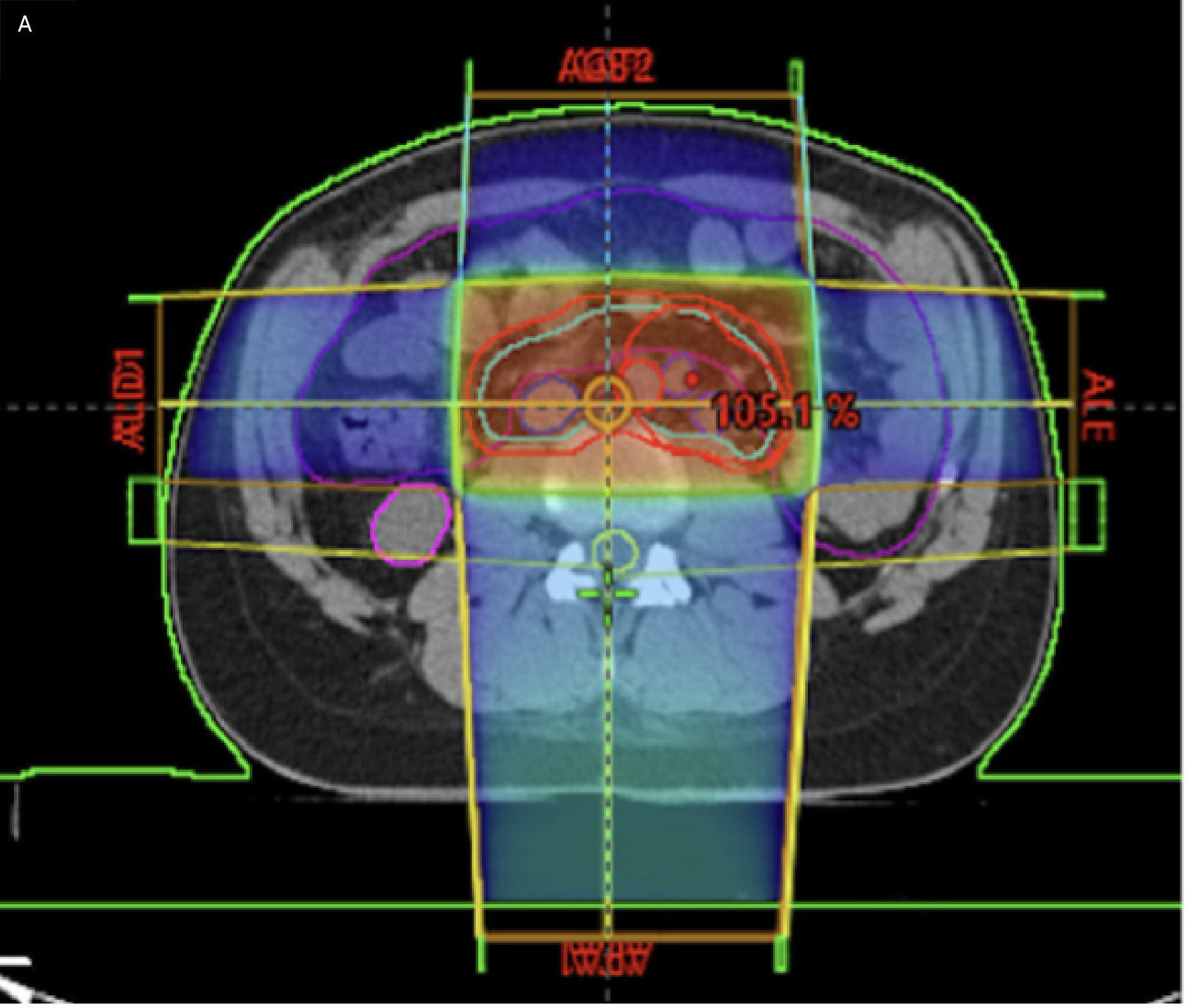
Testicular germ cell tumors are the most common solid malignancies in young men, with seminomas representing a highly radiosensitive subtype typically managed with chemotherapy or radiation therapy (RT) based on staging. 1 While multiagent chemotherapy is one preferred first-line approach for stage 2B disease, its systemic toxicity poses significant risks, especially for patients with severe comorbidities, although there is a notable gap in clinical literature for treatment choice in these high-risk patients. 2 Patients with Down syndrome (DS) present a unique challenge, as they face a significantly increased risk of testicular cancer compared with the general population. 3,4 Additionally, although overexpression of the SOD1 gene in DS suggests a theoretical cellular radiosensitivity, clinical evidence has not demonstrated excess RT-related toxicity when using standard protocols. 5,6 Management is further complicated when DS is paired with Eisenmenger syndrome (ES), a condition of severe pulmonary hypertension that drastically limits cardiopulmonary reserve. 7,8 In such cases, the fluid requirements of cisplatin and the pulmonary risks of bleomycin make systemic therapy potentially fatal. 9,10 Targeted RT to the para-aortic and iliac “dog-leg” fields serves as a curative alternative that excludes the thoracic cavity. 11 This case highlights the efficacy of an escalated 36 Gy dose in achieving disease control while navigating these complex physiological constraints.
Case Description
A 37-year-old man with DS and ES presented with an enlarged left testicle, leading to an inguinal orchiectomy that confirmed a stage pT2N2M0R0S0 seminoma. Initial staging via CT-TAP revealed a 20 mm retroperitoneal lymphadenopathy, but due to the patient’s precarious cardiopulmonary status, the multidisciplinary tumor board initially opted for active surveillance. Progression was soon identified at the 4-month follow-up, with the lateroaortic node enlarging to 23 × 22 mm, confirming a transition to stage 2B disease. Because the hemodynamic instability of ES made cisplatin-based chemotherapy and surgical resection prohibitively dangerous, the team pivoted to curative-intent RT. The patient was treated with a 3D-CRT “dog-leg” technique, delivering a total of 36 Gy in 18 fractions, including a 16 Gy boost to the specific nodal mass. By meticulously excluding thoracic organs from the radiation field, the team eliminated cardiopulmonary exposure and avoided exacerbating the patient’s pulmonary hypertension. The treatment was exceptionally well tolerated without sedation, requiring only continuous pulse oximetry and cardiology oversight to ensure safety. Follow-up imaging at 1 year confirmed a complete response (CR) per RECIST criteria, with the patient remaining stable and asymptomatic Figure 1. 12
Key Insights
This case underscores that while chemotherapy is the conventional first-line treatment for stage 2B seminoma, localized RT at a dose of 36 Gy remains a highly effective curative alternative for patients with life-threatening contraindications to systemic therapy. The successful outcome demonstrates that the theoretical cellular radiosensitivity associated with DS does not translate to clinical toxicity, allowing for the safe administration of standard-of-care radiation protocols. Furthermore, the strategic application of the “dog-leg” field technique achieved a CR while maintaining negligible doses to thoracic organs, successfully bypassing the severe hemodynamic risks inherent to ES. Ultimately, the transition from surveillance to tailored RT underscores the need for a multidisciplinary approach to navigate the complex physiological constraints of high-risk oncology patients. 12
References
- Batool A, Karimi N, Wu X, Chen S, Liu Y. Testicular germ cell tumor: a comprehensive review. Cell Mol Life Sci CMLS. 2019;76(9):1713-1727. doi:10.1007/s00018-019-03022-7.
- Aydin A, Zemp L, Cheriyan S, Sexton W, Johnstone P. Contemporary management of early stage testicular seminoma. Transl Androl Urol. 2020;9(suppl 1):S36-S44. doi:10.21037/tau.2019.09.32.
- Pal A, Daley S. In: StatPearls. 2026.
- Moretti N, Silva A, Guimarães L. The prevalence of solid tumors and hematologic malignancies among patients with Down syndrome: A systematic review and meta-analysis. Crit Rev Oncol Hematol. 2025;205:104558. doi:10.1016/j.critrevonc.2024.104558.
- Shagirova Z, Kurbatova L, Shulenina L, Semyachkina A, Mikhailov V, Zasukhina G. The peculiarities of polymorphism of XPD and XRCC1 repair genes in cells of down and ehlers-danlo syndrome patients characterized by increased radiosensitivity. Biophysics. 2011;56(5):950-954. doi:10.1134/S0006350911050198.
- Goldsby R, Stratton K, Raber S. Long-term sequelae in survivors of childhood leukemia with Down syndrome: A Childhood Cancer Survivor Study report. Cancer. 2018;124(3):617-625. doi:10.1002/cncr.31065.
- D’Alto M, Mahadevan V. Pulmonary arterial hypertension associated with congenital heart disease. Eur Respir Rev. 2012;21(126):328-337. doi:10.1183/09059180.00004712.
- Basit H, Wallen T, Sergent B. In: StatPearls. 2026.
- McAvoy C, Fields P, Otto D, Kreimer A, Ellis C. Incidence of pulmonary toxicity in bleomycin-containing regimens for testicular cancer with and without the use of growth factor. J Oncol Pharm Pract Off Publ Int Soc Oncol Pharm Pract. 2025;31(2):190-194. doi:10.1177/10781552231225766.
- O’Sullivan J, Huddart R, Norman A, Nicholls J, Dearnaley D, Horwich A. Predicting the risk of bleomycin lung toxicity in patients with germ-cell tumours. Ann Oncol. 2003;14(1):91-96. doi:10.1093/annonc/mdg020.
- Classen J, Schmidberger H, Meisner C. Radiotherapy for stages IIA/B testicular seminoma: final report of a prospective multicenter clinical trial. J Clin Oncol Off J Am Soc Clin Oncol. 2003;21(6):1101-1106. doi:10.1200/JCO.2003.06.065.
- van der Elzen C, Alves Vendeira L, Pinto R. Treatment of Stage IIB Seminoma in a Patient with Down Syndrome and Eisenmenger Syndrome: A Case Report. Appl Radiat Oncol. 2025;1(1):1-5. doi:10.37549/ARO-D-25-0019.
Citation
. Navigating High-Risk Comorbidities: Treatment of Stage 2B Seminoma in a Patient With Down Syndrome and Eisenmenger Syndrome. ARO Student Scan. 2026;3(2). doi:10.37549/VirtualRounds_Q2_2026.