RadiatingHope – A decade in global radiation oncology
Applied Radiation Oncology — Vol. 8 , Issue 2 , pp. 27 -32
DOI: 10.37549/ARO1200
Published: June 1, 2019
Categories
RadiatingHope (RH) was founded as a nonprofit organization in 2009, at a time when nongovernmental organizational engagement in global radiation oncology was in its infancy. Co-founders Larry Daugherty, MD, and Brandon Fisher, DO, were radiation oncology residents at the time. As avid mountain climbers, they visited some of the most amazing peaks in the world. On their journeys, they would seek out local hospitals and cancer care facilities, seeing that many of these incredible summits were in underserved low- and middle-income countries (LMICs). Most cancers were diagnosed at advanced stages; cancer care was scarce and access to radiation therapy (RT) was poor or often nonexistent. The number of nations without RT equipment was even greater at that time than the current estimates of 44 nations without RT and a worldwide shortfall of 5000 RT machines in LMICs.1-4 It was clear to Daugherty and Fisher that the challenges were not limited to equipment alone; radiation oncology personnel were few and training was difficult to access.
In this climate, under the mentorship of Dr. Luther Brady, RH forged its mission of improving radiation-oncology-related cancer care globally. Avenues to implement this vision quickly expanded to include advocacy, equipment donation, and education and training. At the heart of RH’s vision is to empower local communities and institutions through partnerships with RH, international medical personnel, and members of industry throughout the world.
Advocacy
Mountaineering
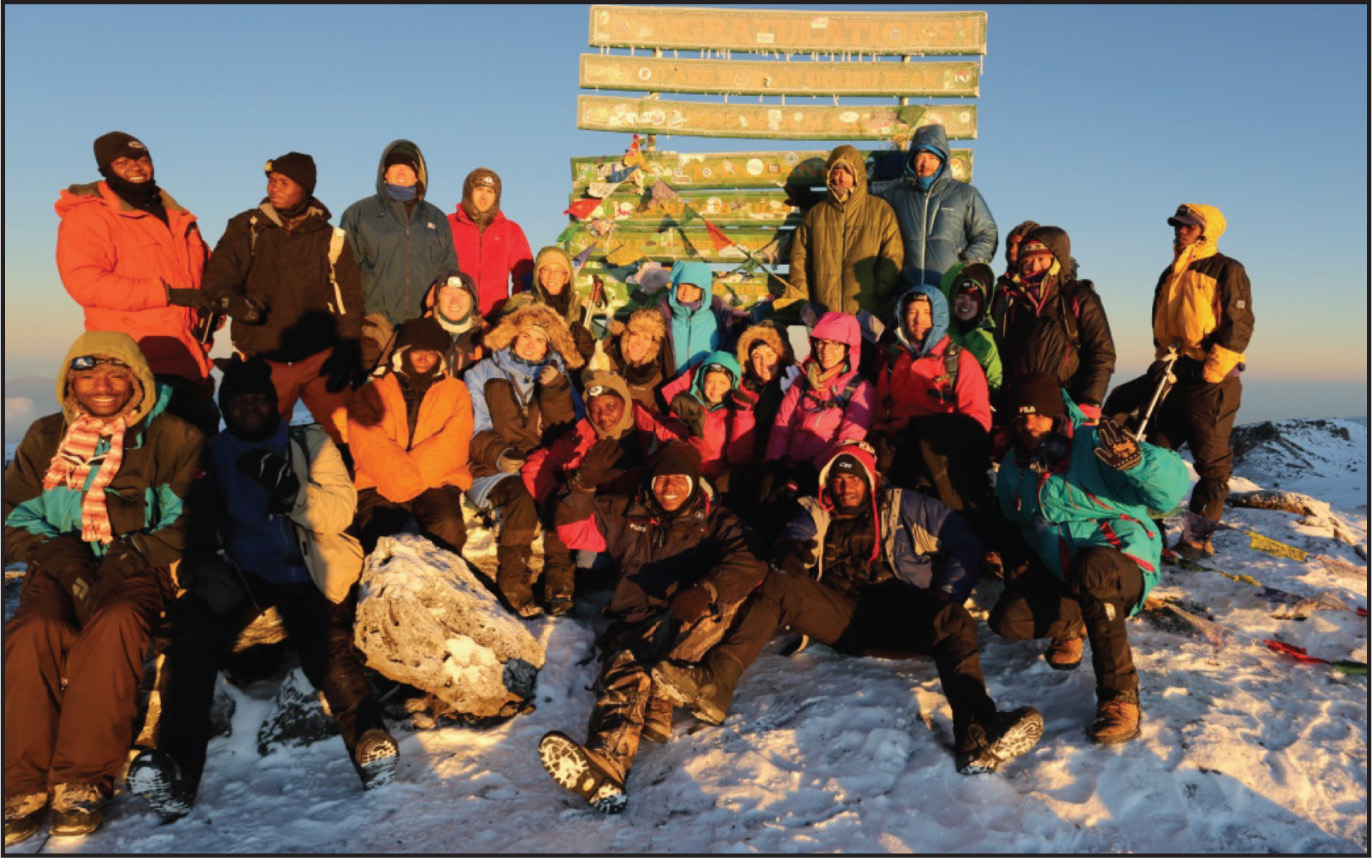
RH may best be known as the group of radiation oncologists who climb mountains for cancer. These expeditions are a means to increase awareness about the condition of cancer care in LMICs and to further advance radiation oncology services. Each climb has a preset pledge amount; climbers raise tax-deductible funds, which are donated to the mission of advancing cancer care, often in the region of the climb. In the past 4 years, close to 300 climbers – including cancer survivors – have joined RH on the annual Kilimanjaro climb (Figure 1), as well as the Everest Base Camp (EBC) and Machu Picchu excursions. The 80 climbers for the 2017 RH EBC trek raised enough funds to purchase a high-dose-rate (HDR) afterloader for the Kathmandu Cancer Center (KCC) in Nepal.
Prayer Flag Project
On their expeditions, designated RH climbers carry Tibetan prayer flags that represent health, hope, strength and well-being. Flags are individually dedicated to cancer patients and are flown at the summit of each peak. So far, these flags have been to Mount Kilimanjaro, Mount Whitney, Mount Aconcagua, Mount Elbrus, Mount Rainier, Mount Washington, the Arctic Circle, Pico De Orizaba, Mount Chukkung Ri, Mount Denali and have now been left flying at EBC.
Equipment Donation, Education and Training
RH realized that its mission of equipment donation was possible when RT machines were donated to Madagascar (cobalt) and Peru (linac) through the Luther Brady Research Institute. With the project in Dakar, Senegal, RH took its first step into the unknown.
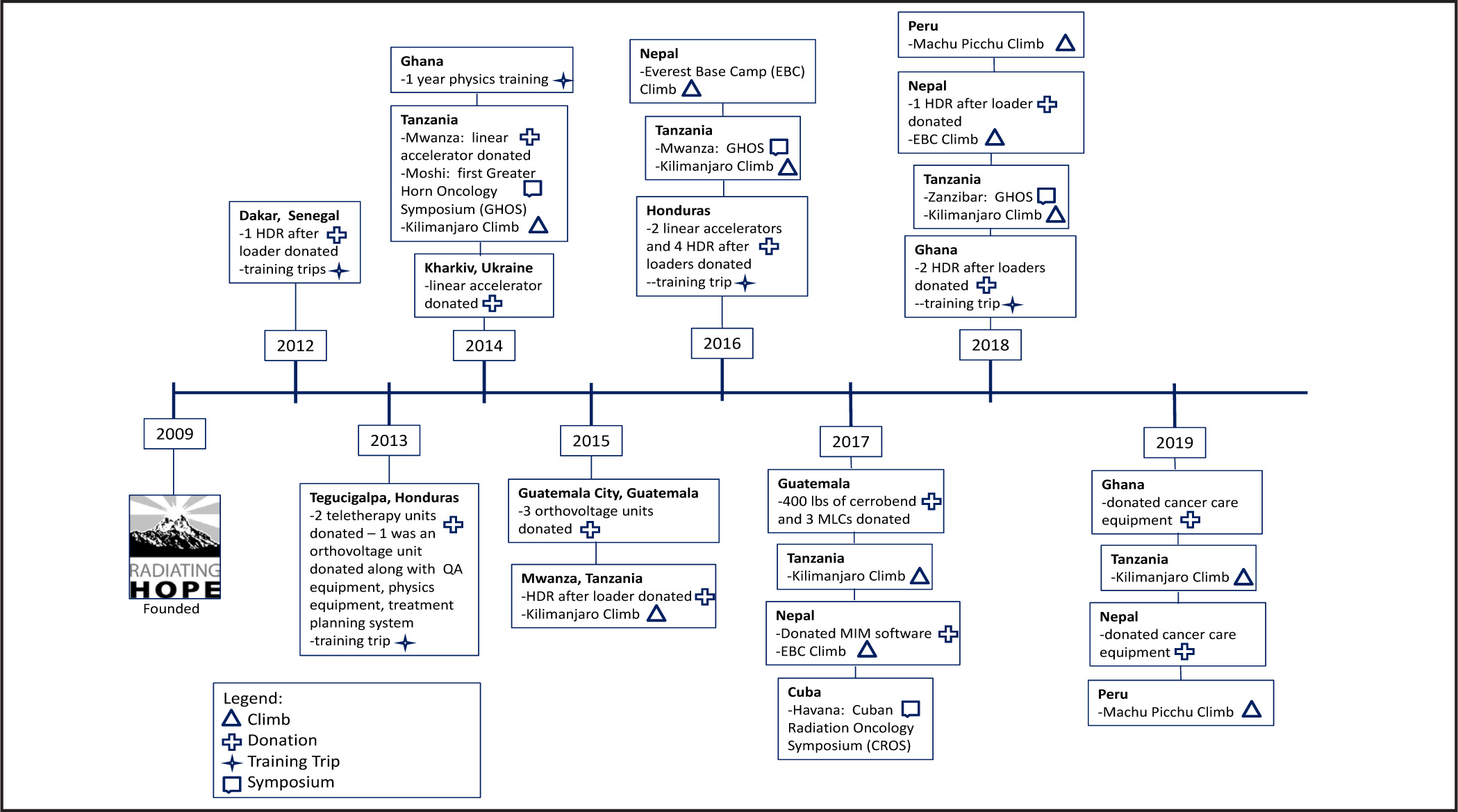
The RH projects in Senegal, Ghana, Honduras, Guatemala and Nepal include equipment donations and training programs to create self-sustainability as well as methods for training others. These endeavors are described in detail in the sidebar to the right; many other projects are listed in Figure 2.
Upcoming Projects
RH is working to help build a partnership with Kenyatta Hospital and Stanford University to create a paradigm for sustainable distance-based clinical learning and an HDR distance training program similar to the one in Ghana; in parts of Central and South America, RH is collaborating with Rayos Contra Cancer and Project ECHO to implement a similar program. Uniting with industry and an international builder, RH is working with Hospital Municipal La Portada in La Paz, Bolivia, to build and equip a start-up oncology center.
Symposia
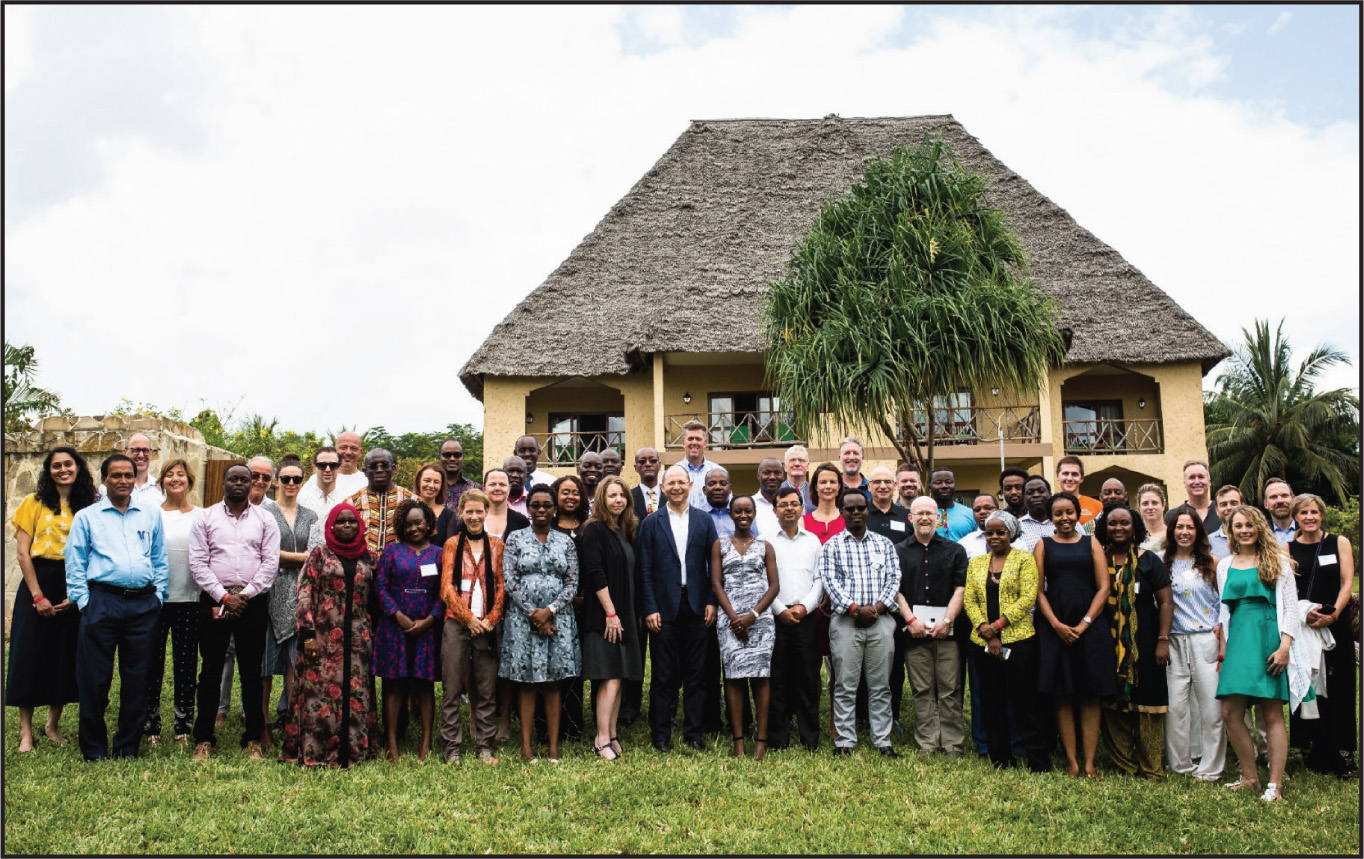
Starting in March 2014, RH hosted its first international meeting – the Greater Horn Oncology Symposium (GHOS), in Moshi, Tanzania, at the Kilimanjaro Christian Medical Centre (KCMC). GHOS serves as a multidisciplinary oncology forum for improving access to cancer care in the Greater Horn of Africa and to create a platform for exchanging ideas among oncology medical professionals around the globe. The second GHOS was held in June 2016 in Mwanza, Tanzania, in collaboration with Bugando Medical Center, and the third in June 2018 in Zanzibar. At the Zanzibar conference, 15 nations were present (Africa - 8, North America - 2, Europe - 4, South Asia -1). Of the 56 attendees, 29 were from Africa, 1 was from Nepal and the remainder were from North America and Europe (Figure 3). Ten participants were radiation oncology residents from Ocean Road Cancer Institute in Dar es Salaam, Tanzania, who had the opportunity to speak directly with international experts in radiation oncology. By bringing together this group of radiation oncologists (ROs), medical physicists (MPs), radiation therapists (RTTs), and members of industry for 3 days, GHOS has sparked collaborations among institutions in North America or Europe and LMICs present at the meeting, and among African nations to help create self-sustaining collaborations in developing local cancer care. Examples include partnerships between physicians in Tanzania and Turkey, as well as ties between institutions in Switzerland and Senegal to advance from 2D to 3D planning. The next GHOS is in June 2020.
A similar meeting – the Cuban Radiation Oncology Symposium (CROS) – was planned for October 2017 in Havana, Cuba. Due to US state department travel recommendations at the time, few US participants attended the meeting; however, more than 20 Cuban ROs were present.
These symposia are largely funded with assistance from industry members, such as Varian (Palo Alto, California) and Elekta (Stockholm, Sweden), covering the travel and lodging expenses of local conference participants; all North American and European participants have managed their own expenses.
Challenges
While undertaking global radiation oncology work, the list of challenges quickly outpaces the list of successes. As is clear from the few projects discussed above, equipment alone is not the only piece of the puzzle missing in advancing global oncology care. The current projected need of these medical personnel in LMICs by 2035 is greater than 10 000 ROs, 9000 MPs and 25 000 RTTs.8 Training sites for these highly specialized individuals are difficult to access, as evidenced by Ghanaian physicists receiving training in China.
Regarding equipment, several nations will not accept used or refurbished RT equipment (including machines and physics equipment). For countries that do, not all donations have been or can be utilized. An institution may have a bunker to hold the machines, but may not have the infrastructure or resources to deploy the equipment. Prior to donating equipment (including machines, treatment applicators, software, etc.), RH undertakes thorough, in-person research of the receiving site in regard to space/bunker availability and appropriateness for equipment, medical personnel availability, medical personnel knowledge, financial stability, energy source stability, local government support, and maintenance for optimal use of equipment. Additionally, contracts are signed for agreement and sustained communication. However, despite these painstaking efforts, not all projects are completed. The 2 orthovoltage units donated to Central America are in storage due to costs of making the units functional, as is the case of the MLCs waiting to be installed in Guatemala. The linac donated to the Bugando Medical Center in Tanzania still sits in crates due to assembly costs required by the manufacturer and the Ministry of Health’s challenges in meeting these demands. Furthermore, governments here are often slower to respond and leadership can change frequently, setting back progress. The donation at the Kharkiv Institute in Ukraine could not be reassembled; however, it was used for parts to update linacs throughout the country.
In Dakar, where the HDR afterloader was successfully installed, used and maintained, several challenges remained with continued operation of the unit, including the cost and logistical difficulty with source changes, limited RO and treatment room time availability for procedures, and equipment downtime, which can be significant. Sustained communication with some sites after donation can also become difficult.
Last, but by no means least, shipping linacs and HDR afterloaders is no small feat. Disassembling a linac, transporting it to storage, shipping it overseas, and transporting it to a facility, can take months, sometimes longer, to reassemble and make functional. These steps depend on the availability of manufacturers in the region, and their ability to put into motion refurbished/used equipment with local government support.
Conclusions
RH’s vision remains clear, and its devotion to increasing access to global radiation oncology care runs deep, strengthened by the incredible individuals engaged in the work and their dedication to help provide cancer care to their family and friends. Since its inception in 2009, RH has learned much along its journey of advancing global cancer care and has encountered seemingly insurmountable difficulties. The importance of collaboration worldwide is obvious during the times of these impossible-appearing summits. As RH climbers have adopted a “climb on” mantra when facing obstacles on a trek, so too has the global oncology world.
Acknowledgements
RH Board of Directors
John P. Einck, MD (president), Tom Ladd (executive director), Tosh Rymer (treasurer), Mira M. Shah, MD (vice president)
RH Board of Trustees
Ashley Cogswell, Ron DiGiaimo, MBA, FACHE, Arno J. Mundt, MD, Shilpen Patel, MD, Adam Shulman, MD
RH Society President
Arno J. Mundt, MD
RH Board Members
George Felis Acquah, MS, Derek Brown, PhD, Brandi Page, MD, David Snow, Ben Wilkinson, MD
Equipment Donors in projects referenced in this article
University of Minnesota, Mayo Clinic, Rutland Regional Medical Center, Connecticut X-Ray, Horizon Medical Services Florida, Willis-Knighton, First Dayton Cancer Care.
Volunteers
Angela Babbo, MD, Anuja Jhingran, MD
References
- DIRAC/IAEA database.
- Abdel-Wahab M, Fidarova E, Polo A. Global access to radiotherapy in low- and middle-income countries. Clin Oncol.. 2017;29(2):99-104.
- .
- .
- Bray F, Ferlay J, Soerjomataram I. Global cancer statistics 2018: GLOBOCAN estimates of incidence and mortality worldwide for 36 cancers in 185 countries. CA Cancer J Clin. 2018;68(6):394-424.
- Einck J, Hudson A, Shulman A. Implementation of a high-dose-rate brachytherapy program in Senegal: a pragmatic model for the developing world. Int J Radiat Oncol Biol Phys. 2013;89(3):462-467.
- Personal communication.
- Atun R, Jaffray D, Barton M. Expanding global access to radiotherapy. Lancet Oncol.. 2015;12:1153-1186.
Citation
. RadiatingHope – A decade in global radiation oncology. Applied Radiation Oncology. 2019;8(2):27-32. doi:10.37549/ARO1200.