Radiation Oncology Beyond Earth: The Next Space Race
ARO Student Scan — Vol. 3 , Issue 3
DOI: 10.37549/RadOncOverview_Q4_2025
Published: August 1, 2026
Categories
Hear me out.
What if the future radiation oncology practice included patients orbiting 250 miles around the earth? Astronauts, especially those traveling to Mars, face radiation exposure risk that is equal to receiving a whole-body CT scan every 5 to 6 days.1
Welcome to the newest frontier of radiation oncology.
Beyond Earth’s protective magnetosphere, space crews face galactic cosmic rays and solar particle events, exposing them to radiation levels higher than on Earth.2 A study supported by the NASA Space Radiation program suggests that for Mars missions beyond low Earth orbit, astronauts’ exposure to cosmic rays and solar particle events may lead to lifetime fatal cancer risks that exceed NASA’s established career limit (3%).3 These are not future concerns as private companies and space agencies are fast-tracking plans for lunar bases and Mars colonies in the decade.
Radiation oncologists possess unique and relevant expertise for space exploration. Their understanding of dose-volume relationships, organ-specific tolerances, and shielding design could directly aid in spacecraft protection challenges (Figure 1).4
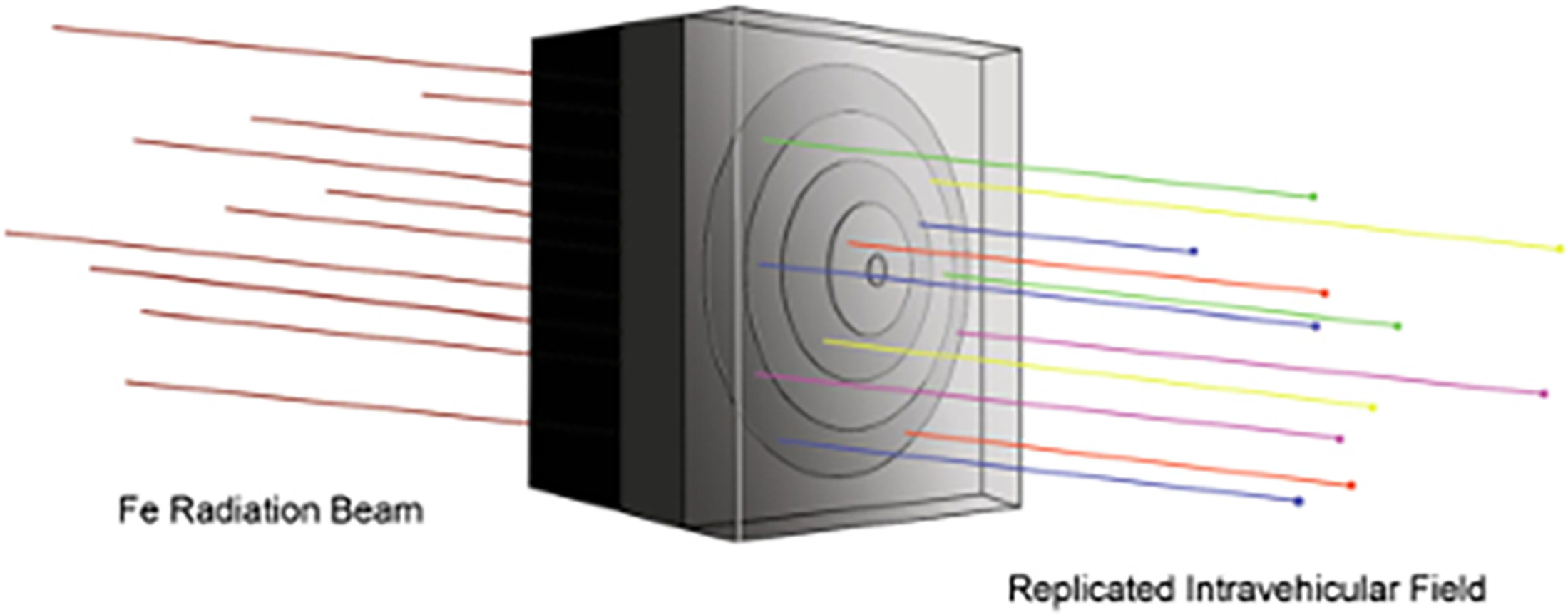
National Aeronautics and Space Administration (NASA) already consults radiation oncologists’ expertise in planning missions, specifically tailoring the treatment planning system to simulate cosmic radiation exposure in various scenarios of a mission.4 Moreover, the European Space Agency (ESA) has also included radiation oncologists in developing customized risk evaluations from the genetics and age of astronauts and the missions’ profiles.5
Researchers are in the process of developing transportable radiation therapy units for space stations, not only for the management of malignancies, but also for the management of bone loss and muscle atrophy in microgravity using targeted, low-dose protocols.6 Scientists are examining tardigrades, or microscopic organisms capable of surviving radiation doses 1000 times the human lethal level, to develop new radioprotectors.7 Serendipitous innovations, such as radioprotectors, developed for astronauts could also transform the management of side effects in patients with cancer.
Why This Matters
Space medicine offers expanding career opportunities. Major medical centers are establishing aerospace medicine programs with NASA, SpaceX, and Blue Origin recruiting radiation experts.8,9 Research funding from space agencies makes it possible for projects that bridge earth and extraterrestrial medicine. These discoveries may benefit Earth-bound radiation oncologists by increasing accessibility, especially in resource-limited regions.
As humanity aims to become multiplanetary, radiation oncologists could play an essential role in protecting explorers from cosmic radiation dangers. The next giant leap for humanity will demand radiation oncologists bold enough to reimagine the specialty and look beyond the confines of the Earth.
References
- Cucinotta F, Schimmerling W, Wilson J. Space radiation cancer risks and uncertainties for Mars missions. Radiat Res. 2001;156(5 pt 2):682-688. doi:10.1667/0033-7587(2001)156%5B0682:srcrau%5D2.0.co;2.
- Elgart S, Little M, Chappell L. Radiation Exposure and Mortality from Cardiovascular Disease and Cancer in Early NASA Astronauts. Sci Rep. 2018;8(1):8480. doi:10.1038/s41598-018-25467-9.
- Cucinotta F, Hu S, Schwadron N. Space radiation risk limits and earth-moon-mars environmental model. Space Weather. 2010;8(12). doi:10.1029/2010SW000572.
- Chancellor J, Blue R, Cengel K. Limitations in predicting the space radiation health risk for exploration astronauts. NPJ Microgravity. 2018;4:8. doi:10.1038/s41526-018-0043-2.
- Straube U, Berger T, Reitz G. Operational radiation protection for astronauts and cosmonauts and correlated activities of ESA medical operations. Acta Astronautica. 2010;66(7-8):963-973. doi:10.1016/j.actaastro.2009.10.004.
- Willey J, Livingston E, Robbins M. Risedronate prevents early radiation-induced osteoporosis in mice at multiple skeletal locations. Bone. 2010;46(1):101-111. doi:10.1016/j.bone.2009.09.002.
- Jönsson K, Rabbow E, Schill R, Harms-Ringdahl M, Rettberg P. Tardigrades survive exposure to space in low Earth Orbit. Curr Biol. 2008;18(17):R729-R731. doi:10.1016/j.cub.2008.06.048.
- Antonsen E, Myers J, Boley L. Estimating medical risk in human spaceflight. NPJ Microgravity. 2022;8(1):8. doi:10.1038/s41526-022-00193-9.
- Blue R, Chancellor J, Antonsen E. Limitations in predicting radiation-induced pharmaceutical instability during long-duration spaceflight. NPJ Microgravity. 2019;5:15. doi:10.1038/s41526-019-0076-1.
Citation
. Radiation Oncology Beyond Earth: The Next Space Race. ARO Student Scan. 2026;3(3). doi:10.37549/RadOncOverview_Q4_2025.