RSNA 2004 preview
Applied Radiology — Vol. 33 , Issue 11 , pp. 46 -50
DOI: 10.37549/AR1297
Published: November 1, 2004
Categories
The 90th Scientific Assembly and Annual Meeting of the Radiological Society of North America (RSNA 2004) will be held in Chicago, IL, November 28 through December 3, 2004. The theme, “Radiology’s Global Forum” will be echoed throughout the scientific presentations and technical exhibits.
Scientific Program Committee Chairman George S. Bissett, III, MD, Vice-Chair of the Department of Radiology at Duke University Medical Center, Durham, NC, recently detailed several important trends in this year’s scientific program. He noted an increase in studies related to the use of functional magnetic resonance (MR) imaging to evaluate areas of the body other than the brain, including the heart and abdomen. In addition, he noted a trend toward expanded use of ablation techniques—including radiofrequency ablation, cryoablation, and laser thermal ablation—to treat tumors in the genitourinary tract, breast, lung, and bone. He also noted greater use of hybrid imaging technology, particularly positron-emission tomography (PET) combined with computed tomography (CT) and MR, as well as new research on angiogenesis imaging to evaluate tumor activity and to identify early tumor growth.
More than 6400 scientific abstracts were submitted and reviewed for this year’s meeting. Of those, approximately 1600 scientific papers and 500 scientific posters were accepted.
Two highlights of RSNA 2004 are expected to be a mock malpractice jury trial and the demonstration of the use of computer simulators in radiology.
The mock trial, which is being coordinated by Leonard Berlin, MD, Chairman of the Department of Radiology at Rush North Shore Medical Center, Skokie, IL, will take place on Sunday, November 28, from 10:30 AM to 3:30 PM in room S100AB in the South Building at McCormick Place. Two attorneys and several expert witnesses will participate in the unscripted trial of a malpractice case involving a patient with lung cancer. The jury will be chosen from a volunteer group of RSNA 2004 contractors working at McCormick Place. Cook County Circuit Judge Stuart Nudelman, who has served as President of the Illinois Judges Association, will preside.
On Wednesday, December 1, a hot topic focus session, “Is Medical Simulation a Part of Your Future? Education in the Era of Patient Safety,” will examine the role of medical simulators in radiology education. The session, which will be moderated by Steven L. Dawson, MD, Associate Professor of Radiology at Harvard, Cambridge, MA, was designed to familiarize radiologists with state-of-the-art medical simulation and to raise awareness of the potential of this technology. A hands-on exhibit of medical simulators will be available in the info-RAD area.
In addition to the scientific program and special sessions, more than 630 vendors will display the latest innovations in imaging technology in the technical exhibit halls.
Barco features new mammography display
Barco (Booth 8537) will be featuring the company’s new Coronis 5MP Mammo display system for digital mammography imaging (Figure 1). Based on the company’s Coronis technology, this recently approved system’s new features include Per Pixel Uniformity (PPU) and Defect Pixel Compensation (DPC). The PPU technology, designed to reduce screen noise, measures and adjusts the luminance output of each individual pixel. The DPC feature detects and identifies defect pixels in each individual display to help ensure that no data is missing.
The system also includes the high-speed BarcoMed 5MP2FH display controller for fast image loading and smooth roaming, and the company’s I-Guard technology, which continually guards and adjusts the luminance output of the diagnostic viewing area at the front of the display. In addition, the system includes DuraLight, the company’s proprietary long-lifetime backlight, which, the company says, prolongs the average lifetime of the display’s backlights by a factor of 3 to 5.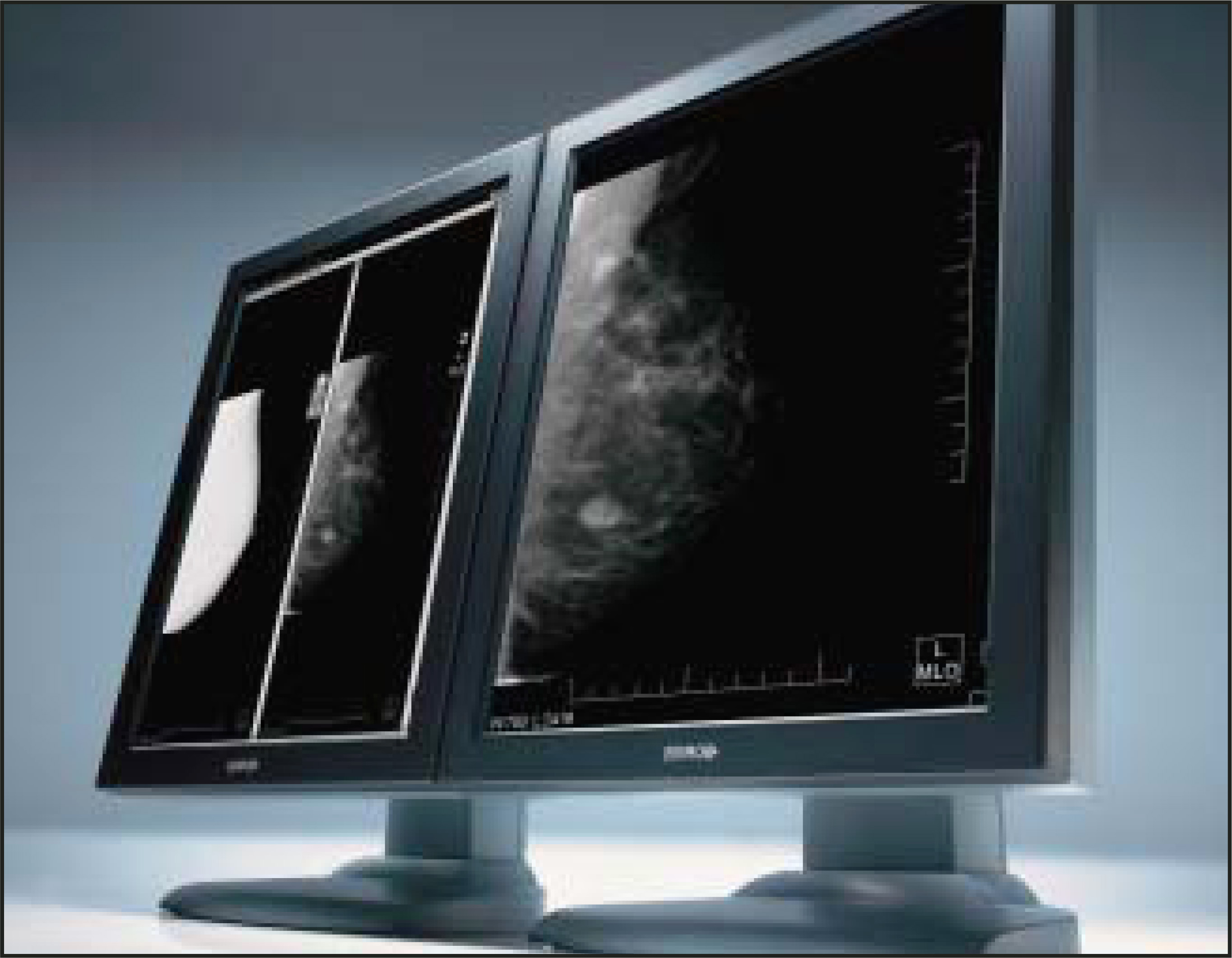
iCAD to highlight five products
Computer-aided detection (CAD) vendor iCAD (Booth 3973) plans to highlight five currently available products at this year’s RSNA, ranging from a small film-based CAD system designed to perform fewer than 20 studies per day to a digital system designed to handle up to 39 cases per hour and a system that performs CAD on both film-based and digital mammography as well as breast MR imaging.
The smallest of these systems, the Enhanced Second Look 200, was designed for film-based mammography performed in low-volume breast imaging clinics, ie, those that perform fewer than 20 mammograms per day. The principal objective of this system, according to the company, is to make reimbursable CAD financially feasible for small clinics. The system is priced at <$50,000 or can be leased for <$1000 per month. The company also offers this system with its ClickCAD fee-per-procedure program at a price of $8 per case.
The second product highlighted is the Enhanced Second Look 500. This system includes a DICOM file interface for film-based clinics that plan to upgrade to digital. The system, which is upgradeable to digital, also provides multimodality support, including support for breast MR imaging. Prices start at $100,000. The company will also feature the Second Look 500M, which can also be upgraded to digital and performs CAD on both mammography and breast MR imaging, providing multimodality CAD on a single viewer. This system is priced from $180,000.
In addition, the Second Look Digital, which is now available on the GE Senographe DS and the Hologic Selenia Diamond, as well as the Senographe 2000 from Fischer and GE, will be showcased. According to the company, this combination of CAD and digital mammography provides sensitivity comparable to film-based CAD with lower false-positive rates. Finally, the Enhanced Second Look 400/402 will be displayed. This system incorporates the Second Look 6.0 algorithms on systems designed for high-volume breast imaging centers, particularly those that batch read mammograms. The company notes that the 402 can process up to 39 cases per hour. Prices start at $70,000.
Planar introduces new review cart
Planar (Booth 8308) will introduce their new Dome RC3 Surgery Review Cart (Figure 2), designed to allow on-demand image viewing during surgery and to alleviate the need for prestacking of images. The Dome RC3 will be available in four different monitor resolutions and configured for use in the operating room for referral viewing of a variety of modalities including X-ray, computed tomography (CT), MR, nuclear imaging, and ultrasound.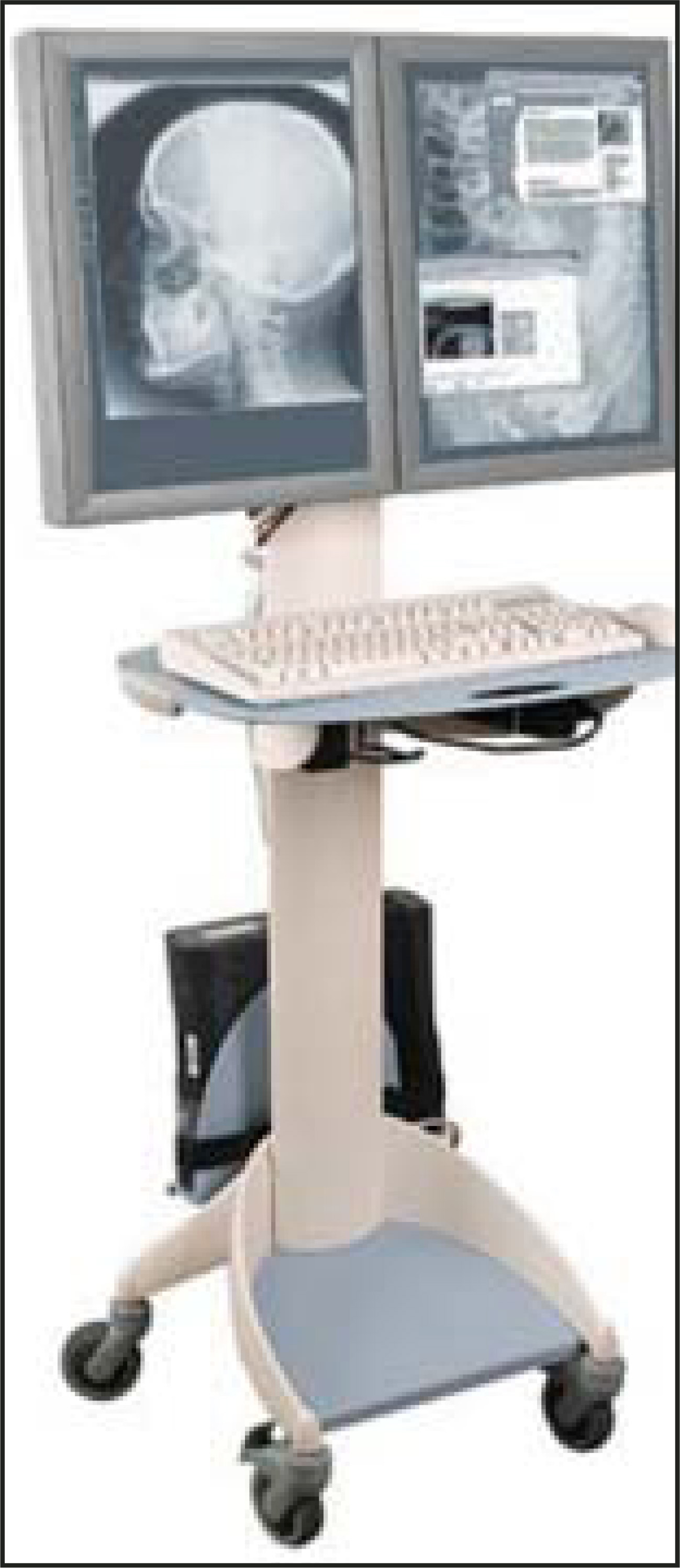
The system includes the company’s Dome CXtra software to ensure that image quality conforms to DICOM standards. According to the company, this software also provides enterprise management capabilities, enabling administrators and IT staff to monitor display performance and calibration from a central location using industry-standard interfaces. The Dome RC3 will also come equipped with a Planar video cart, a cart that holds a keyboard and mouse on a height- and angle-adjustable tray, and a mounting bracket for securing a minitower computer processing unit (CPU; not included).
Planar will also feature its new network application, the Dome Dashboard. Designed to monitor and manage the performance of the company’s display systems in a picture archiving and communication system (PACS) environment, Dome Dashboard provides alerts for a variety of problems, including if a display is down, its calibration is off, or the white level has dropped out of tolerance.
RamSoft to unveil latest software version
RamSoft, Inc. (Booth 8320) will feature its PowerServer, offering unlimited users and workstations, document management, interactive unsharp mask enhancement, and an MR imaging pathology finder. Satellite Gateway connects modalities to PowerServer, and the new TeleServer provides Web-based interpretation capability for institutions that already have a PACS. The latest software, version 3.2, adds the ability to select a scout thumbnail. The images and thumbnails can then be printed, recorded onto CD, exchanged using the Web, or e-mailed.
Siemens to feature a broad range of products
Siemens Medical Solutions (Booth 2729) will feature a wide range of products across the spectrum of imaging modalities. In the field of MR imaging, the company will highlight its Magnetom Avanto, the first 1.5T MR system to include the company’s proprietary Total imaging matrix (Tim) technology; and the Magnetom Espree open-bore 1.5T MR system. The large-bore Espree was designed to address issues relating to obesity and claustrophobia, as well as the needs of elderly and pediatric patients, while still allowing for high-field magnet strength.
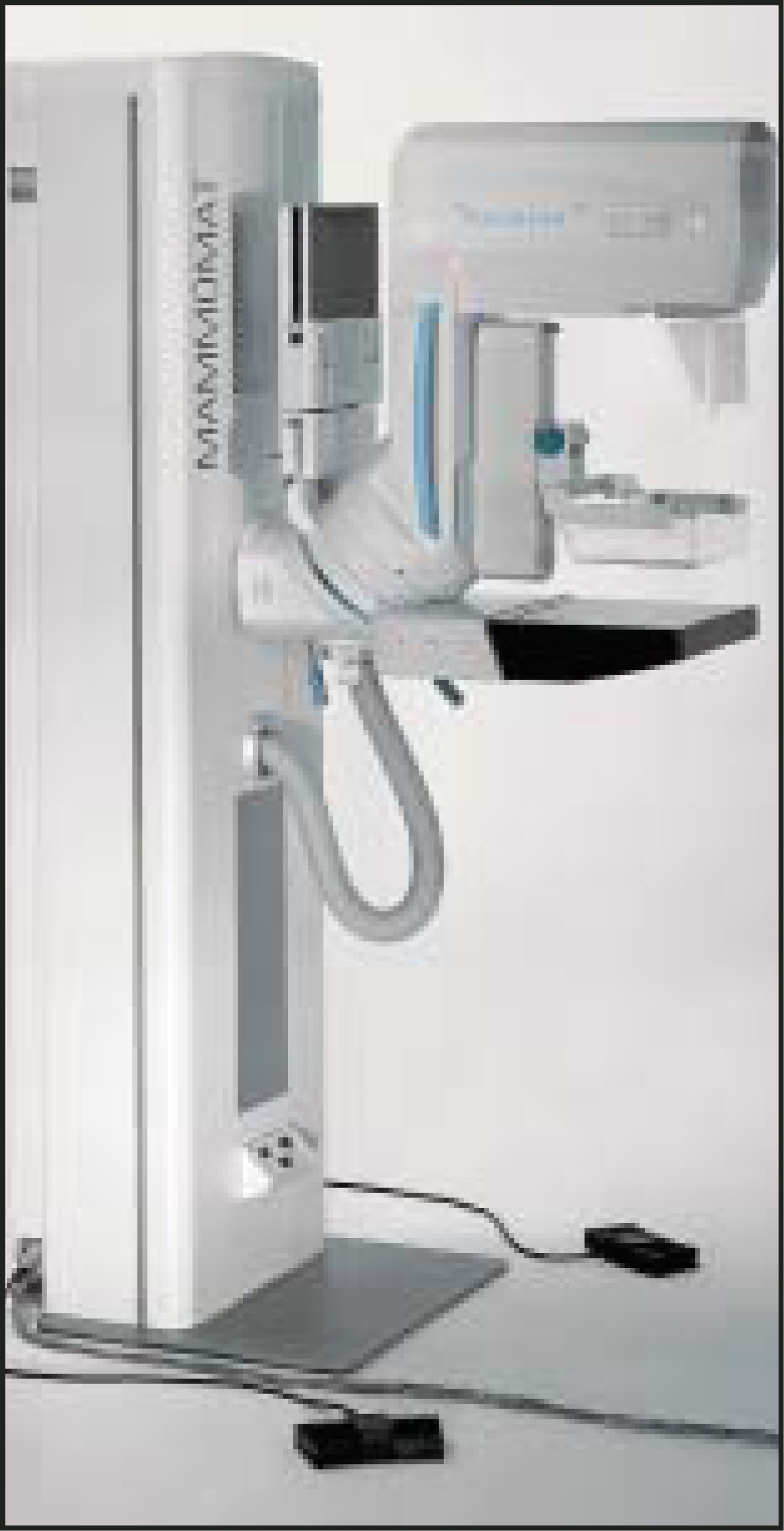
In the field of women’s health imaging, Siemens will feature its recently approved Mammomat NovationDR, a full-field digital mammography system. This system was designed for use in a variety of breast imaging procedures, including digital screening, diagnosis, and stereotactic biopsy.
In ultrasound, Siemens will highlight the new fourSight 4D technology on its Sonoline Antares ultrasound system. This technology allows for real-time display of 3-dimensional images. The company also plans to introduce several new features for its high-end Acuson Sequoia ultrasound platform.
In addition, Siemens will present its new hybrid TruePoint single-photon emission computed tomography/CT (SPECT/CT) and will announce new installations of the Somatom Sensation 64 CT system during RSNA 2004.
DeJarnette
DeJarnette Research Systems, Inc. (Booth 1729) will feature their dyseCT technology, designed to address billing issues related to multislice CT studies in a PACS environment. This technology identifies multiple procedure studies and modifies the DICOM modality work-list using a group procedure to replace the multiple procedures. It then analyzes the images and automatically associates them with a specific anatomical region and with the appropriate orders. DyseCT release 2.0 features an improved segmentation algorithm, the ability to manage neurological studies, improved handling of CT auto-send for some scanner models, automatic destination failover, and storage commit proxy capability.
The company will also preview, as a work in progress, their MR dyseCT product, designed to perform similar functions for MR scanners in a PACS environment.
And finally…
While you’re at RSNA 2004, don’t forget to stop by and visit Applied Radiology at Booth 7711.
Citation
. RSNA 2004 preview. Applied Radiology. 2004;33(11):46-50. doi:10.37549/AR1297.